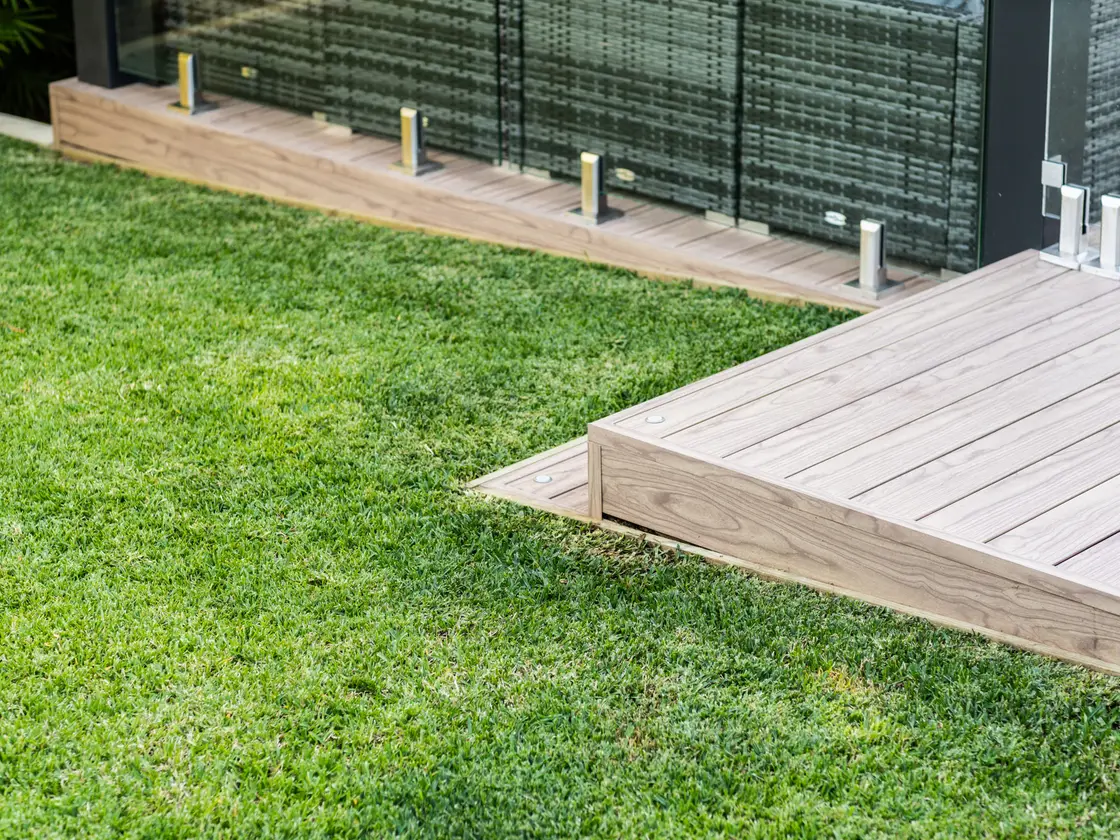
| Underfoot | Coolest of the three at 48–52°C, and it stopped climbing after about an hour of sun | Warmest of the three at up to 65°C, but the closest of the three to the feel of real timber | 60–61°C, and the only one that's actually timber |
| Bushfire (BAL) | Non-combustible, and meets performance requirements up to BAL FZ (Flame Zone) | Rated to BAL-19 on the products we'd put forward — check the certificate for the specific board | Restricted by species, and excluded altogether at higher BAL ratings |
| Upkeep | Wash it. No oiling, staining or sanding, ever | No oiling or sealing either — washing is the whole job | Oil or stain every year or two, and sand it back eventually |
| Movement & rot | None — it doesn't swell, cup, splinter or rot, and termites have no interest | Won't rot or attract termites, but moves 1–1.5mm per metre with temperature, so it has to be gapped properly | Moves with the weather, and needs protecting from rot and termites |
| Made from | Aluminium, with a baked timber-look finish | Reclaimed timber blended with recycled and new plastics — the recycled option of the three | Hardwood or softwood, renewable if it's sourced well |
| Warranty | 12 years on the finish | Up to 25 years on some products — full value for the first 10, then reducing each few years after | No product warranty; it comes down to the timber and the upkeep |
| Cost | Highest to buy, lowest to keep | In between, and it varies a great deal by brand | Cheapest to buy, dearest to look after |
| The catch | It costs the most, it's a timber look rather than timber, and if the finish is ever damaged you replace the board — you can't sand it back | It's the warmest underfoot, and quality across the market ranges hugely, so the specific product matters more than the word 'composite' | It'll ask you for work every year, and on a bushfire-prone block it may not be an option at all |